Our goal with this list is to offer you twelve recommendations for our unique historical moment.
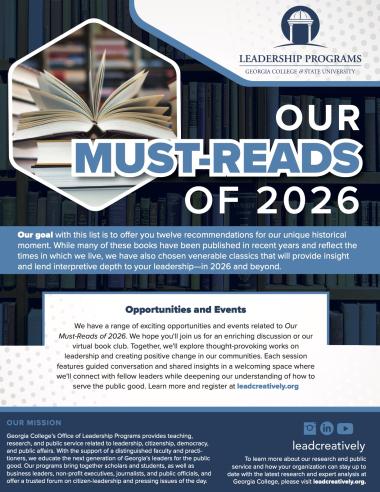
Our goal with this list is to offer you twelve recommendations for our unique historical moment. While many of these books have been published in recent years and reflect the times in which we live, we have also chosen venerable classics that will provide insight and lend interpretive depth to your leadership—in 2026 and beyond.
Join Us!
We have a range of exciting opportunities and events related to Our Must-Reads of 2026. We hope you'll join us for an enriching discussion in our Virtual Book Club.
Virtual Book Club
Each session features guided conversation and shared insights in a welcoming space where we'll connect with fellow leaders while deepening our understanding of how to serve the public good.
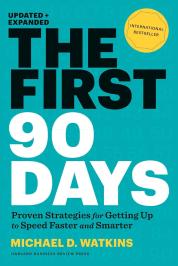
The First 90 Days: Proven Strategies for Getting Up to Speed Faster and Smarter
Michael D. Watkins
Harvard Business Review Press (2013)
One-Sentence Summary
The critical first three months in a new leadership role require deliberate strategies for learning, building relationships, and establishing early wins that set the foundation for long-term success.
Author and Context
Michael D. Watkins is a leadership expert, professor, and co-founder of Genesis Advisers, specializing in leadership transitions and organizational change. He has taught at leading business schools including Harvard and IMD, focusing on helping leaders navigate complex transitions. Watkins published The First 90 Days in 2003, updated in 2013, recognizing that while leadership transitions have become more frequent and more critical to organizational success, most leaders received little practical guidance on navigating them effectively.
Why We Chose this Book
In an era when leaders in 2026 face constant transitions, whether taking on new roles, navigating organizational restructuring, or adapting to rapid market changes, Watkins provides a framework that transforms the vulnerability of being new into an opportunity for strategic impact. His insights matter because the stakes of leadership transitions have never been higher: teams need direction faster, organizations can't afford long learning curves, and the window for establishing credibility has shortened dramatically. The book challenges leaders to be intentional rather than reactive during periods of change, showing that success isn't about having all the answers immediately but about asking the right questions, building the right alliances, and securing early wins that create momentum. For anyone stepping into new leadership territory (and in today's world, that's practically everyone) this work offers practical wisdom on how to accelerate learning, avoid common pitfalls, and establish the foundation for sustained effectiveness when the pressure is on and the clock is ticking.
Image
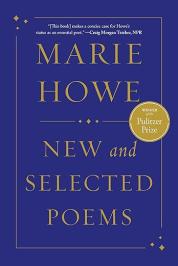
New and Selected Poems
Marie Howe
W. W. Norton (2025)
One-Sentence Summary
Through precise, emotionally resonant poems that explore love, loss, mortality, and the sacred in everyday moments, Howe illuminates the profound depths of ordinary human experience.
Author and Context
Marie Howe is an acclaimed American poet known for her accessible yet profound verse that explores grief, spirituality, family, and the beauty found in daily life. She has served as Poet Laureate of New York State and teaches at New York University and Sarah Lawrence College. New and Selected Poems gathers work from across Howe's career, offering readers a comprehensive view of a poet whose work has helped people find language for experiences that often feel beyond words: loss, love, and the search for meaning.
Why We Chose This Book
In a world where leaders in 2026 are expected to communicate primarily through data, bullet points, and strategic frameworks, Howe's poetry reminds us that some of the most important aspects of human experience, such as grief, wonder, connection, transformation, require different language and deeper attention. Her work matters for leaders because it demonstrates the power of truly seeing and honoring what's in front of us, of finding significance in small moments, and of speaking truthfully about difficult experiences rather than glossing over them. For leaders trying to build genuine human connection and meaning in their organizations and communities, poetry offers something that leadership books and frameworks cannot: practice in attending closely, feeling deeply, and expressing what matters with honesty and precision. Most importantly, Howe's poems remind us that leadership isn't only about strategic vision and execution; it's also about being fully present to the people we serve and the moments we share, and about helping others find language and meaning in their own experiences.
Image
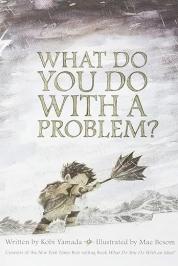
What Do You Do With a Problem?
Kobi Yamada
Compendium (2016)
One-Sentence Summary
A child's journey from avoiding a persistent problem to ultimately embracing and solving it reveals how challenges, when confronted with courage, can become opportunities for growth and transformation.
Author and Context
Kobi Yamada is an American author, speaker, and creator known for inspirational works that explore creativity, possibility, and human potential through deceptively simple stories. His books, often illustrated collaborations, have reached millions of readers seeking meaningful perspectives on life's challenges and opportunities. Yamada published What Do You Do With a Problem? in 2016 as part of his series of philosophical picture books, responding to the need for accessible wisdom about resilience and problem-solving that speaks to both children and adults navigating uncertainty.
Why We Chose this Book
While originally written as a children's book, Yamada's work offers leaders in 2026 a profound reminder about our fundamental relationship with problems: our instinct to avoid, minimize, or delegate challenges often prevents us from discovering the opportunities they contain. The book's simple but powerful message speaks to a core leadership challenge: how do we shift our organizations from problem-avoidance to problem-engagement, creating cultures where people see difficulties not as threats to dodge but as puzzles to solve? For leaders trying to build more resilient and innovative teams, this accessible story demonstrates that how we frame challenges matters enormously. Problems that seem insurmountable when we run from them often become manageable, even valuable, when we turn to face them directly. Most importantly, it reminds us that teaching people to engage courageously with problems, rather than protecting them from all difficulty, is one of the most important gifts leaders can offer.
Image
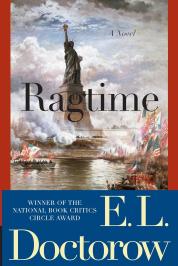
Ragtime: A Novel
E. L. Doctorow
Random House (1975)
One-Sentence Summary
Through the intertwined lives of three families in early twentieth-century America—one wealthy and white, one poor and immigrant, one Black and artistic—Doctorow explores the collision of social classes, races, and ideologies during a period of dramatic transformation and upheaval.
Author and Context
E. L. Doctorow was an American novelist known for blending historical events and figures with fictional narratives to explore themes of American identity, justice, and social change. His innovative approach to historical fiction earned him numerous awards, including the National Book Award and National Book Critics Circle Award. Doctorow wrote Ragtime in 1975 during the aftermath of the Watergate scandal and Vietnam War, a period when Americans were deeply questioning national myths and institutions. The novel looks back to the Progressive Era (1902-1912) to examine America's ongoing struggles with racial injustice, economic inequality, and the promise of democracy, using the past as a mirror for contemporary concerns.
Why We Chose this Book
Ragtime offers leaders in 2026 a powerful lens for understanding how societies navigate large-scale change, and what happens when institutions fail to adapt to shifting expectations of justice and inclusion. Doctorow shows us that leadership during periods of upheaval isn't just about managing processes; it's about recognizing when old systems and assumptions no longer serve everyone, and having the moral courage to respond. The novel's central conflict reveals how leaders who cling to rigid hierarchies and refuse to see the full humanity of those they've marginalized can turn legitimate grievances into crises, while those who practice empathy and fairness can help channel the energy of change toward democratic renewal. For today's leaders working to build organizations and communities that genuinely serve the common good, this book raises essential questions about when to preserve tradition and when to break with it, how to respond when people demand the dignity they've been denied, and what it means to lead with both principle and pragmatism in times that test our deepest values.
Image
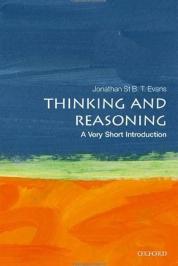
Thinking and Reasoning: A Very Short Introduction
Jonathan Evans
Oxford University Press (2017)
One-Sentence Summary
An exploration of the psychological science behind how humans think, reason, make decisions, and solve problems, revealing both the remarkable capabilities and systematic limitations of human cognition.
Author and Context
Jonathan Evans is a British cognitive psychologist and leading researcher in the psychology of reasoning, judgment, and decision-making. His work has significantly advanced understanding of dual-process theories of thinking and the cognitive biases that affect human reasoning. Evans wrote Thinking and Reasoning in 2017 as part of Oxford's Very Short Introductions series, synthesizing decades of cognitive psychology research during a time when understanding thinking errors and cognitive biases had become increasingly important for navigating a complex information environment.
Why We Chose this Book
For leaders in 2026 making high-stakes decisions in environments flooded with information, misinformation, and AI-generated content, understanding how human thinking actually works, including where it systematically goes wrong, has become essential rather than optional. Evans provides leaders with crucial insights into the cognitive shortcuts and biases that affect everyone's judgment, helping us recognize when our intuitions might mislead us and when we need to slow down and think more deliberately. Effective leadership isn't just about having the right values or vision; it's about making sound decisions under pressure, and that requires understanding the mental processes that can either support or undermine good judgment. Most practically, this work helps leaders design better decision-making processes for their teams, create environments that reduce cognitive errors, and develop the metacognitive awareness to catch themselves when fast thinking leads them astray. These skills only become more valuable as decisions become more complex and consequential.
Image
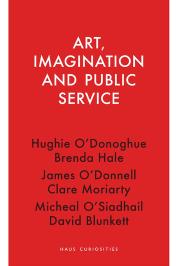
Art, Imagination, and Public Service
Hughie O'Donoghue, Brenda Hale, James O'Donnell, Claire Moriarty, Micheal O'Siadhail, and David Blunkett
Haus (2021)
One-Sentence Summary
Leading figures from art, law, literature, and public service explore how imagination and creative thinking are essential—not peripheral—to effective governance, justice, and civic leadership.
Author and Context
The contributors include Hughie O'Donoghue (visual artist), Baroness Brenda Hale (former President of the UK Supreme Court), James O'Donnell (musician and Master of Music at Westminster Abbey), Claire Moriarty (civil servant), Micheal O'Siadhail (poet), and David Blunkett (former Home Secretary). Together, they represent diverse perspectives on how creative and artistic thinking intersects with public service and leadership. This collection emerged from the Westminster Abbey Institute's work exploring ethics and imagination in public life, addressing growing concerns that technocratic approaches to governance were neglecting the creative and moral dimensions essential to serving the common good.
Why we Chose this Book
In an era when leaders in 2026 often feel pressure to rely solely on data, metrics, and technical expertise, this collection makes a compelling case that imagination and artistic sensibility are not luxuries but necessities for effective public leadership. The diverse contributors demonstrate that the ability to envision alternatives, understand human experience deeply, and think creatively about complex problems is what separates leaders who merely manage systems from those who genuinely serve communities and solve novel challenges. For leaders working in government, nonprofits, or any public-facing role, the book offers permission and encouragement to bring their whole selves, including their creative and imaginative capacities, to the work of leadership. Most importantly, it challenges the false dichotomy between "practical" management and "soft" creative thinking, showing that the most effective leaders integrate analytical rigor with imaginative vision, bringing both head and heart to the essential work of building a better society.
Image
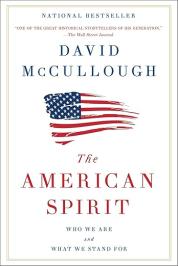
The American Spirit: Who We Are and What We Stand For
David McCollough
Simon & Schuster (2018)
One-Sentence Summary
Through speeches delivered over several decades, historian David McCullough reflects on the character, values, and historical experiences that have shaped American democracy and civic life.
Author and Context
David McCullough was a Pulitzer Prize-winning American historian, narrator, and author renowned for his accessible, narrative-driven biographies and histories of American figures and events. His work, including books on John Adams and the building of the Brooklyn Bridge, brought history to life for millions of readers and helped shape public understanding of American heritage. McCullough compiled The American Spirit in 2017 from speeches given between 1989 and 2016 during a period of growing concern about civic knowledge, political polarization, and Americans' connection to their shared history and democratic traditions.
Why We Chose this Book
At a moment when leaders in 2026 face deep questions about national identity, democratic resilience, and shared values, McCullough offers something increasingly rare: a historically grounded perspective on what has sustained American democracy through previous periods of crisis and division. His work matters for leaders because it demonstrates that understanding where we've been—the struggles, compromises, and hard-won achievements of previous generations—provides essential context for navigating where we're going. The book challenges leaders to see themselves as part of a longer story, responsible not just for quarterly results or election cycles but for stewarding democratic institutions and civic values across generations. For anyone leading in public service, education, or community organizations, McCullough's reflections remind us that citizenship and leadership require ongoing cultivation, that democratic ideals demand constant renewal, and that knowing our history isn't nostalgia; it's practical wisdom for making better decisions about our shared future.
Image
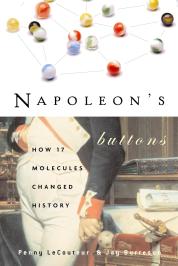
Napoleon's Buttons: How 17 Molecules Changed History
Penny Le Couteur and Jay Burreson
Jeremy P. Tarcher (2004)
One-Sentence Summary
The chemical structures of seventeen molecules—from salt and spices to vitamins and polymers—have fundamentally shaped human civilization, driving exploration, warfare, trade, and technological advancement throughout history.
Author and Context
Penny Le Couteur is a Canadian chemist and educator known for making chemistry accessible to general audiences through engaging storytelling. Jay Burreson is an American chemist and author who has focused on connecting scientific concepts to historical events and everyday life. Le Couteur and Burreson published Napoleon's Buttons in 2003 during a period of growing interest in interdisciplinary approaches to understanding history, seeking to show how scientific developments have been central, not peripheral, to major historical turning points.
Why We Chose this Book
For leaders in 2026 navigating technological disruption and scientific advancement, this book offers a crucial reminder that understanding minute technical details actually matters. Seemingly abstract scientific knowledge has profound consequences for society, economics, and power. The authors demonstrate that leaders who grasp the underlying mechanisms of change, whether in chemistry, technology, or any field, are better positioned to anticipate shifts, make informed decisions, and shape outcomes rather than simply react to them. At a time when AI, climate science, and biotechnology are reshaping our world, this book challenges leaders to bridge the gap between technical expertise and strategic decision-making, showing that curiosity about how things actually work isn't just intellectual exercise, it's essential leadership capacity. Most importantly, it reminds us that small differences in understanding can lead to vastly different outcomes, whether in regards to molecular structures or organizational strategies.
Image
Beyond the White House: Waging Peace, Fighting Disease, Building Hope
Jimmy Carter
Simon & Schuster (2007)
One-Sentence Summary
Former President Jimmy Carter reflects on his post-presidential work with The Carter Center, demonstrating how dedicated leadership can address global challenges including disease eradication, election monitoring, and conflict resolution.
Author and Context
Jimmy Carter served as the 39th President of the United States from 1977 to 1981 and subsequently devoted his life to humanitarian work through The Carter Center, earning the Nobel Peace Prize in 2002. His post-presidential career became a model for how former leaders can continue serving the public good long after leaving office. Carter wrote Beyond the White House in 2007, after more than twenty-five years of post-presidential service, to document how citizen diplomacy and targeted humanitarian interventions can achieve results that traditional government channels often cannot.
Why We Chose this Book
Carter's post-presidential work offers leaders in 2026 a powerful counter-narrative to the idea that leadership is primarily about holding titles or wielding formal authority. His experience shows that some of the most important leadership happens when we leverage our expertise, relationships, and moral authority to tackle problems that others have written off as unsolvable; whether that's eradicating diseases, mediating conflicts, or strengthening democratic institutions. For leaders at any stage of their careers, Carter's approach demonstrates the importance of long-term commitment over quick wins, the power of working across traditional boundaries, and the reality that leadership effectiveness often comes from asking "what needs doing?" rather than "what will enhance my position?" Most profoundly, the book challenges us to think about legacy not as what we accomplished during our peak years, but as what we chose to do with our influence and experience in service of others.
Image
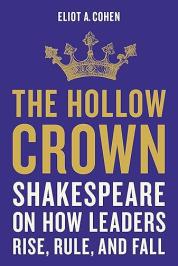
The Hollow Crown: Shakespeare on How Leaders Rise, Rule, and Fall
Eliot A. Cohen
Basic (2023)
One-Sentence Summary
Shakespeare's history plays offer timeless insights into political leadership, revealing how ambition, character, legitimacy, and the burdens of power shape the rise and fall of rulers across the centuries.
Author and Context
Eliot A. Cohen is an American political scientist, military historian, and former State Department official known for his expertise in military strategy and civil-military relations. His scholarship bridges academic analysis and practical policy experience, particularly in national security and defense leadership. Cohen published The Hollow Crown in 2023, drawing on Shakespeare's political plays to illuminate contemporary leadership challenges at a time when democracies worldwide were grappling with questions of legitimate authority, political polarization, and the character of leaders.
Why We Chose this Book
Shakespeare's kings and queens face challenges that leaders in 2026 still recognize: the gap between the public role and private self, the loneliness of decision-making, the corrupting potential of power, and the constant tension between political necessity and moral principle. Cohen's analysis demonstrates that these are not just historical curiosities, but enduring dilemmas of leadership that play out in boardrooms, city halls, and national capitals today. For leaders trying to navigate their own rise, rule, or transition, Shakespeare offers something data and case studies cannot: profound psychological insight into how power changes people, how legitimacy is won and lost, and how character is tested under pressure. The book challenges leaders to think deeply about their own relationship with power and ambition, to recognize the warning signs of hubris and self-deception, and to understand that how we gain and use authority matters as much as what we accomplish with it.
Image
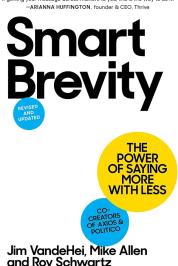
Smart Brevity: The Power of Saying More with Less
Jim VandeHei, Mike Allen, and Roy Schwartz
Workman (2022)
One-Sentence Summary
In an age of information overload, effective communication requires ruthless concision, strategic clarity, and respect for your audience's limited time and attention.
Author and Context
Jim VandeHei, Mike Allen, and Roy Schwartz are co-founders of Axios, a media company known for its distinctive "Smart Brevity" approach to news delivery that emphasizes clarity and concision. Their backgrounds in journalism and media innovation led them to develop systematic methods for cutting through noise to deliver essential information efficiently. The authors published Smart Brevity in 2022, drawing on their experience building Axios during a period when information overload, declining attention spans, and digital communication had made clear, concise communication both more difficult and more essential than ever.
Why We Chose this Book
For leaders in 2026 competing for attention in an environment where everyone is drowning in messages, emails, reports, and notifications, the ability to communicate with clarity and brevity has become an essential leadership ability, not just a nice-to-have skill. VandeHei, Allen, and Schwartz provide practical techniques that help leaders cut through the noise, ensuring their most important messages actually get through and drive action rather than getting lost in overstuffed inboxes. The book matters because ineffective communication isn't just frustrating, it's expensive, leading to missed deadlines, misaligned teams, and wasted effort when people don't understand what's actually being asked of them. For any leader trying to align teams, communicate vision, or drive change, this book offers a framework for respecting people's time while increasing your impact, showing that saying less, but saying it better, is often the most powerful thing you can do.
Image
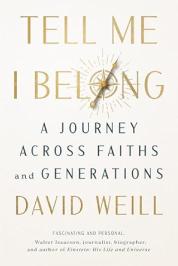
Tell Me I Belong: A Journey Across Faiths and Generations
David Weill
Union Square & Co. (2025)
One-Sentence
A personal exploration of identity, faith, and belonging traces connections across religious traditions and generations, revealing how we construct meaning and community in an increasingly fragmented world.
Author and Context
David Weill is a writer and educator who explores themes of identity, interfaith understanding, and the search for belonging in contemporary society. His work draws from personal experience navigating multiple faith traditions and cultural contexts. Weill published Tell Me I Belong during a period of increasing religious pluralism alongside growing religious polarization, seeking to show how personal journeys across faith boundaries can illuminate paths toward understanding and connection rather than division.
Why We Chose this Book
For leaders in 2026 working in increasingly diverse organizations and communities, Weill's personal journey offers essential insights into how people construct identity, find meaning, and navigate belonging across different traditions and worldviews. Effective leadership today requires genuine understanding of how faith, culture, and identity shape people's experiences and perspectives. The book challenges leaders to expand beyond managing diversity as a compliance issue and move toward genuinely engaging with the complexity of how people make sense of their lives and find community. Most importantly, it demonstrates that creating truly inclusive environments requires leaders who can accommodate for differences, recognize the intrinsic human need for belonging, and build bridges across boundaries without requiring everyone to be the same. These skills are essential for efficient and inclusive workplaces in today's pluralistic society.
Georgia College & State University takes no institutional position on public policy and remains non-partisan and apolitical. The views expressed here do not necessarily reflect the views of Georgia College & State University, the Board of Regents of the University System of Georgia, or the State of Georgia. The author did not receive financial support from any firm or person for this paper or from any firm or person with a financial or political interest in this paper. The author is not currently an officer, director, or board member of any organization with an interest in this paper. No outside party had the right to review this paper before circulation. This paper does not provide professional advice. The contents of this paper, including text, graphics, and images are for informational purposes only. The content is not intended to be a substitute for professional legal or financial advice. Always seek professional advice from qualified advisors on legal and financial matters.